9+ curated guides • Updated August 2025
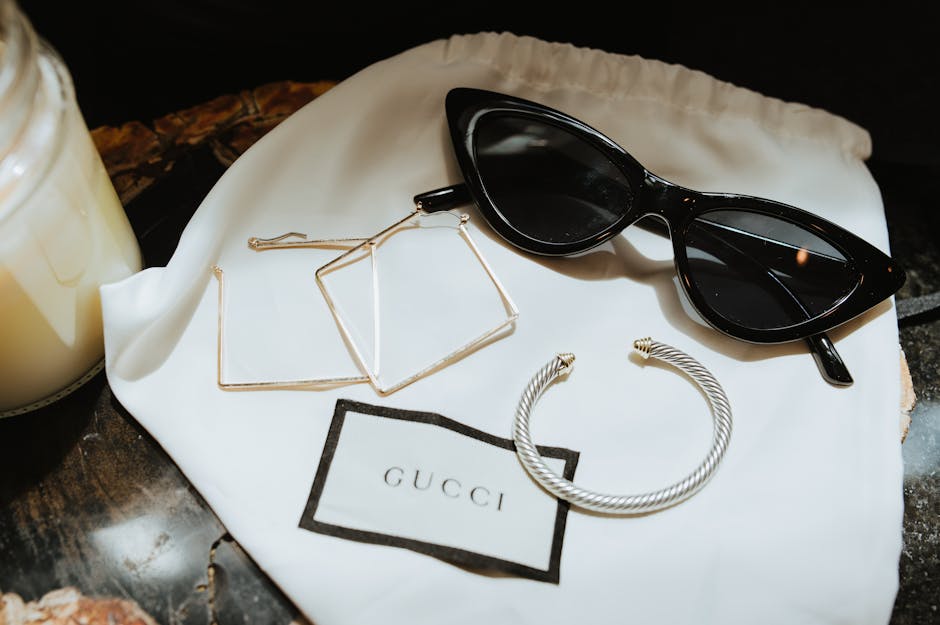
Remember the explosion of chunky gold chains and dopamine-drenched beads in 2022? That wasn't an accident; it was a cultural signal. We'll move beyond the 'what' and explore the 'why,' revealing how our collective desire for strength, joy, and nostalgia was worn on our wrists, necks, and ears. As a fashion psychologist, I analyze these adornments not as mere accessories, but as artifacts of a specific moment in time—a time when we were collectively re-emerging, re-evaluating, and reclaiming our identities. The jewelry of 2022 was our chosen language, a non-verbal broadcast of our internal state to the outside world.
You've bought the tequila with the A-lister's signature and seen the ads for the supermodel's rosé. But while the famous face gets the credit, a ghost distiller is in the lab perfecting the mash bill. This is the story of the unsung masters who turn celebrity concepts into award-winning spirits. In the deafening roar of celebrity marketing, their work is a quiet, persistent hum—the methodical thud of a barrel being rolled, the precise hiss of a still, the clink of a glass holding a spirit tasted not for a photo op, but for perfection. This isn't a critique of celebrity brands; it's a spotlight redirected. We're pulling back the curtain to celebrate the architects of taste, the anonymous artisans whose hands, noses, and palates are the true signature on every bottle.
Everyone is obsessed with Eddie Munson's necklace, but we've been looking at it all wrong. It's not just a cool accessory or a simple guitar pick; it's a carefully chosen piece of character armor, a relic pulled directly from the heart of 1980s metalhead culture. Let's decode the symbols forged into that chain and uncover the real-world story it tells about rebellion, identity, and belonging. This isn't merely about what the necklace is, but what it signifies—to Eddie, to the community he represents, and to the hostile world of Hawkins, Indiana. As a cultural historian, I see this object not as a prop, but as a primary source document. It’s a testament to the power of costume design to communicate a lifetime of experience, allegiance, and defiance in a single, potent symbol.
You've refreshed Celebrity Dirty Laundry for the tenth time today, desperate for the latest Y&R spoilers. But what if the biggest secret isn't what happens next in Genoa City, but how these spoiler sites actually work? We're pulling back the curtain to reveal the patterns, sources, and educated guesses that fuel the spoiler machine, turning you from a passive reader into a savvy show analyst. Forget simply consuming plot points; we're here to teach you the art of spoiler craft. By understanding the methodology behind the predictions, you gain a deeper appreciation for the narrative and learn to separate the high-probability forecast from the hopeful fan fiction. Welcome to your masterclass in soap opera forensics.
Headlines tell you who we lost. They rarely reveal what we gained and continue to live with. This week, we're looking past the traditional obituaries to trace the surprising 'echo effect' of a recently departed creator—uncovering one specific technique, trend, or idea they pioneered that has permanently woven itself into the fabric of our modern lives. While the world mourns television director Akira Tanaka, known for his late-90s cult series Neon Ghosts, we are focusing on the single, revolutionary visual technique he gifted to storytelling: the 'Introspective Cutaway.' This wasn't just a stylistic quirk; it was a fundamental shift in how character psychology could be portrayed on screen, an echo that now resounds in everything from blockbuster films to 30-second social media videos.
You’re hungry, so you pull out your phone and type 'Uber Eats near me.' A list of familiar restaurants appears, alongside a trendy new burger joint you've never seen before. Before you tap 'order,' consider this: that new restaurant might not actually exist—at least, not as a place you could ever walk into. This investigation peels back the digital curtain on the phenomenon of 'ghost kitchens,' delivery-only culinary brands operating out of shared, often unmarked, industrial spaces. These are the invisible engines of the app-based food economy, and they are fundamentally changing what it means to be a restaurant.
You saw the viral post and probably saved it for your next salon visit. But while the world was hunting for the perfect chrome powder, a complex financial machine was already in motion. That celebrity manicure wasn't just a pretty trend; it was a calculated economic event that generated millions, shifted product demand overnight, and proved the most powerful force in the beauty industry might be at a celebrity's fingertips. This isn't just about aesthetics; it's about arbitrage, supply chains, and the strategic deployment of cultural capital. We're moving beyond the look to uncover the ledger.
You came looking for a price tag, but the story of Gucci's most expensive hat isn't about the cost—it's about the value. This isn't just headwear; it's a meticulously crafted piece of brand lore, a symbol of an economic echelon, and a fascinating case study in what makes an object worth more than its weight in gold. Before we dissect the anatomy of this wearable asset, understand this: the five- or even six-figure sum attached is merely the entry point. The true value is unlocked by understanding the confluence of history, material science, and the powerful psychology of desire that Gucci has masterfully engineered. This article moves beyond the superficial to analyze the very essence of modern luxury, using this singular object as our lens.
The news of a celebrity's death sends shockwaves across the internet, but what happens after the trending hashtags fade? Their social media profiles become digital tombstones, their final posts gathering comments for years to come. We're entering a new era where a person's legacy is curated by estate managers and AI, forcing us to ask: who truly owns a celebrity's identity after they're gone? This isn't about how they died; it's about how they live on, indefinitely, in the digital ether. We are the first generation to witness the birth of the digital ghost, an entity that exists in a liminal space between memory and marketability, tribute and technology. This article peels back the curtain on the silent, booming industry of posthumous identity management.